Power is the cause of 45 % of serious outages (Uptime Institute 2025), most involving the UPS. Knowing within a minute that you are on battery is the difference between a clean shutdown and a corrupted array.
Most UPS units have a relay or dry-contact output for "on battery" and "low battery". Wire it to a logger input; no UPS software, no SNMP card needed.
Put the PoE switch and the logger on the UPS. The logger then reports through the outage and adds the alarm that follows every power cut: rising temperature when the cooling has stopped.
Alert on two channels: e-mail from the device and push or SMS via a cloud app, because the mail server may be on the same failed circuit.
ISO 27001:2022 control 7.4 is new: premises must be continuously monitored for unauthorised physical access, with intruder detection, alarms or CCTV. A lock alone is no longer evidence.
A magnetic contact costs about EUR 10, needs no power, and connects to a dry-contact input on the same logger that measures rack temperature.
The logger records every opening with a timestamp, sends e-mail on an opening outside working hours, and exposes the state over SNMP to Zabbix or PRTG.
For a co-located or shared rack, a door contact on the cabinet is the control the auditor asks about; the room door belongs to the landlord.
Article 5 of Regulation 852/2004 requires HACCP-based procedures with monitoring at critical control points and records; Annex II Chapter IX requires the cold chain not to be interrupted.
The regulation sets no fixed logging interval. Twice-daily manual checks are common practice; the inspector checks that you did what your plan says.
Manual logs fail in two ways: the gap (Sunday, holiday, staff shortage) and the copied number (4 °C every day for a year). Both are visible to an inspector.
An automatic logger with alarms costs about the same as one written-off fridge of stock, and gives a continuous record instead of two points a day.
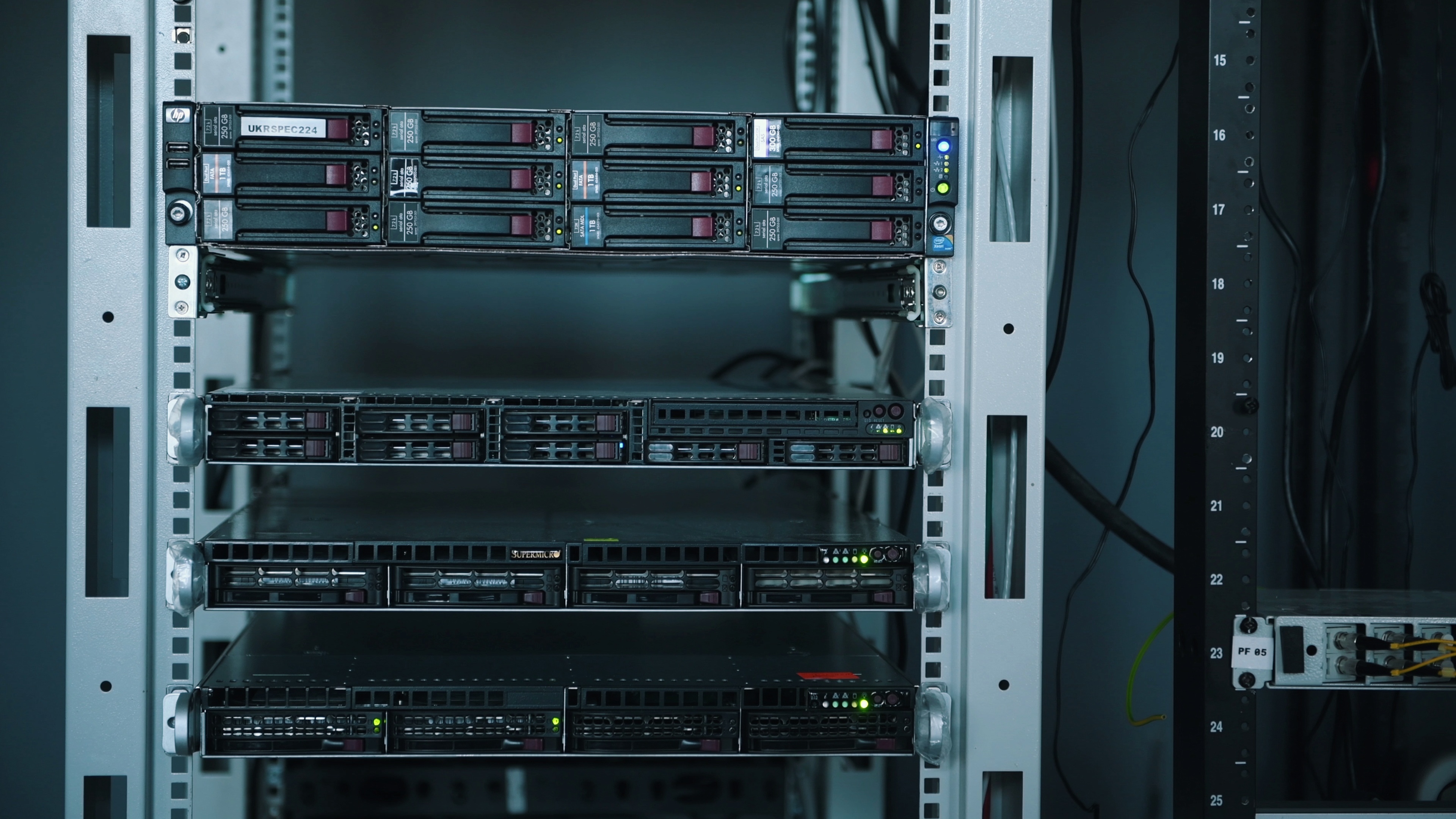
ASHRAE limits (18–27 °C recommended) apply to the equipment inlet. Measure at the front of the rack, never at the exhaust or on the wall.
Full data-centre practice is three probes per rack (top, middle, bottom of the front). A small server room gets by with one at the top front of each rack.
Put one humidity sensor per room in the cold aisle, and one leak sensor under each cooling unit.
Add one probe at the return air of the AC unit. The inlet-to-return difference tells you whether cooling is keeping up before any limit is crossed.
WiFi loggers need mains power and WiFi coverage at every point. Right for 3–12 points in offices, cold rooms next to a wall socket, and small warehouses.
LoRa at 868 MHz reaches up to 1 km in open space and through several walls; one gateway takes up to 32 battery sensors. Right for halls, yards and racking with no sockets.
Budget per measuring point: roughly EUR 125–160 for a WiFi or LAN logger and a lower per-sensor cost on LoRa once the gateway is paid for.
Every wireless system needs the same three things: a local read-out that works without the internet, alarms on two channels, and a history you can export for an audit.
Cookies and related technologies allow the website to function properly and help us adjust the offer to your needs. You can choose to accept our use of all these files and go to the store, or adapt the use of files to your preferences by selecting "Customize Consents".
Here you can define your preferences regarding the use of cookies.
These files are necessary for our website to function so they can't be switched off.
These files allow you to use other functions of the website (other than those necessary for its functioning). Enabling these files will give you access to the full functionality of the website.
These files allow us to analyze our online store, which may contribute to its better functioning and adaptation to the needs of our Users.
The data used by the store software provider - cyber_Folks S.A. - is used for analyses related to software development and to measure the effectiveness of advertising campaigns. This data is not linked with other information provided during registration and order placement. For more information, refer to Shoper cookies policy.
With these files, we can conduct marketing activities.